
 Ubud · Denpasar · Gianyar
Bali Spiritual Products for Global Markets
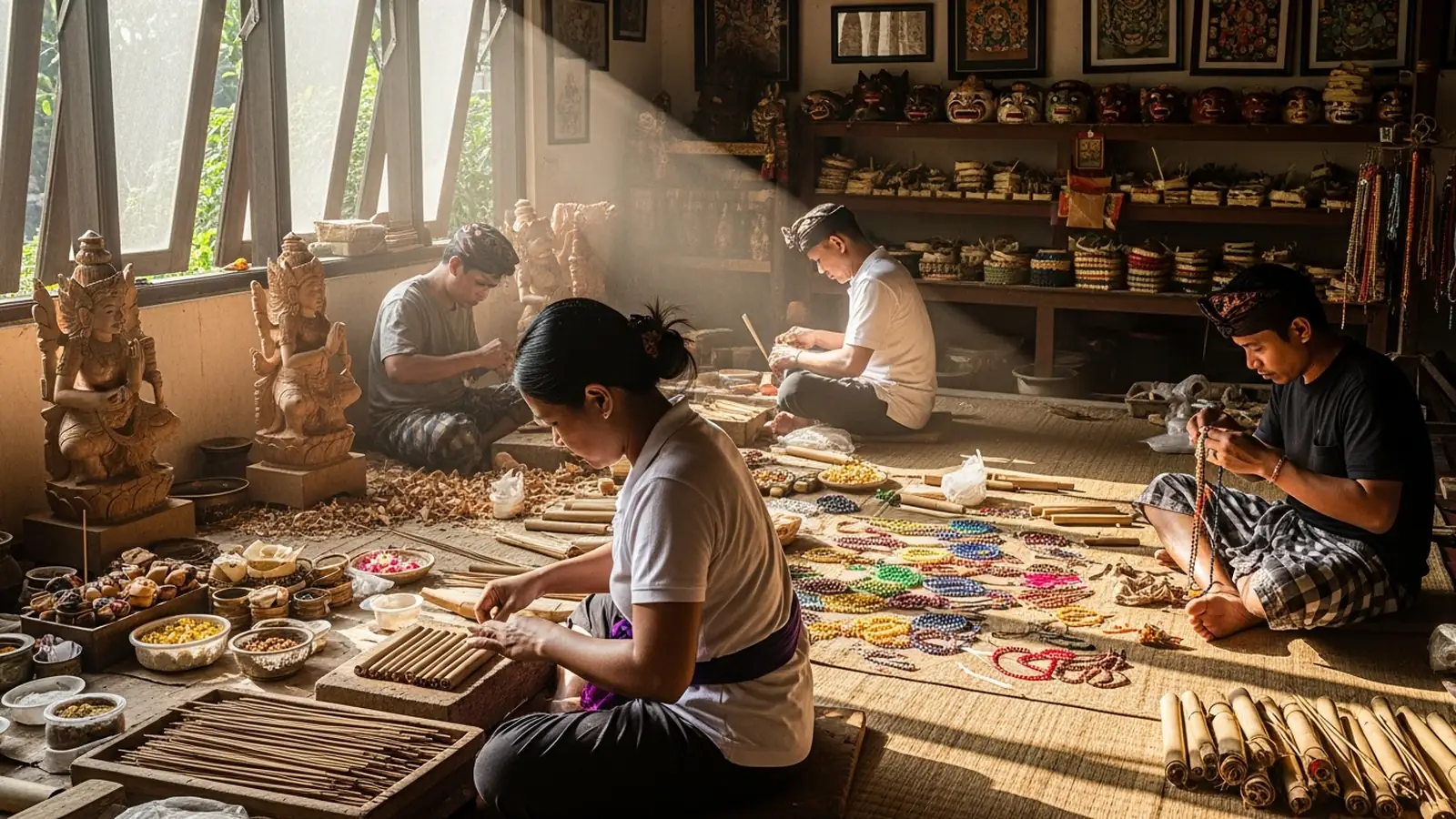
Explore our range of authentic Balinese incense, statues, and spiritual items, crafted by local artisans. Ideal for retailers and wholesalers seeking genuine products with spiritual significance.
What are you sourcing?
Tell us what you need and we'll guide you to the right products and next steps.
Bali Spiritual Products is your premier B2B partner for authentic Balinese spiritual items. We specialize in exporting handmade goods that embody the rich cultural heritage of Bali. Our offerings are tailored to meet the needs of global buyers while ensuring compliance with all Indonesian export laws. Whether you seek incense, altar decor, or meditation accessories, our commitment is to provide quality, legality, and cultural respect.
Understanding the Export Framework
Exporting Balinese spiritual products requires navigating a framework set by Indonesian law. Companies must be legally registered, typically as a PT PMA (Penanaman Modal Asing), a foreign investment limited liability company. Establishing a PT PMA involves a minimum paid-up capital of approximately IDR 2.5 billion (around USD 150,000–175,000). The structure mandates at least two shareholders, one Director, and one Commissioner. Compliance with these requirements is crucial to operate legally and avoid penalties. For further details, consult the official Indonesian government resources.
Legal Requirements for Exporting
To legally export spiritual products from Bali, a company needs a Business Identification Number (NIB) and a Trading Business License (SIUP). These are issued through Indonesia’s OSS system. Additionally, a Tax Identification Number (NPWP) is necessary to manage corporate taxes and VAT. Companies must also secure a Building Permit (PBG) and a Location/Business Place Permit (SITU) for their physical operations. These legalities ensure that all trading activities align with national regulations, protecting both the business and its international partners.
Taxation and Financial Incentives
The corporate income tax (CIT) rate in Indonesia is generally 22%. However, small enterprises with an annual turnover of up to IDR 50 billion can benefit from a 50% CIT reduction on turnover up to IDR 4.8 billion. When a company’s turnover reaches IDR 4.8 billion, it must register for VAT and apply it where applicable. Exporters may also qualify for tax incentives, including potential import duty reductions and VAT exemptions on certain goods. These financial considerations are pivotal for maintaining competitive pricing in the international market.
Product Specifications and Compliance
Balinese spiritual products exported globally are predominantly handmade, ranging from incense holders to meditation decor. Exporters often set minimum order quantities (MOQ) between 100–300 pieces per product. Buyers must prepare documentation such as a commercial invoice, bill of lading, packing list, and certificate of origin for customs clearance. For wooden products, a phytosanitary certificate may be required to meet plant health standards. This meticulous attention to documentation and standards ensures smooth customs processing and delivery.
Prohibited and Restricted Items
Exporting certain spiritual items from Bali is subject to strict regulations. Sacred artifacts used in ongoing religious ceremonies are not legally exportable. Antiques considered national treasures may also face export restrictions. Products made from endangered wildlife or rare timber require special permits or are entirely restricted. Ensuring compliance with these rules is essential to uphold cultural integrity and avoid legal issues. For detailed regulations, visit the Indonesian Ministry of Foreign Affairs.
Steps for Establishing a Trading Company
Establishing a trading company in Bali involves several steps. Initially, entrepreneurs must secure the necessary capital to form a PT PMA. Following this, they need to obtain all required permits and licenses, such as the NIB and SIUP. Engaging with local legal advisors can facilitate this process, ensuring compliance with Indonesian laws. While some may opt for “under-name export” arrangements initially, setting up a personal entity is advisable for long-term operations. For guidance, our comprehensive guides offer insights into every step.
Importing Considerations for International Buyers
International buyers must be aware of their country’s import regulations when purchasing Balinese spiritual products. Import duties, GST, or VAT may apply, with rates such as 10% GST in countries like Australia and New Zealand. Buyers should confirm these rates with local authorities to avoid unexpected costs. Additionally, regulations regarding wooden products may necessitate fumigation or other treatments. For a seamless transaction, we recommend consulting with customs brokers familiar with both Indonesian exports and the buyer’s import laws.
Cultural Significance of Balinese Spiritual Products
The spiritual products from Bali are deeply embedded in the local culture and religious practices. Each item, from incense sticks to prayer beads, carries a unique significance and is crafted with intention. Incense, for instance, is often used in daily offerings to cleanse spaces and invite positive energy. Similarly, prayer beads are not just decorative but are used in meditation to focus the mind. Understanding the cultural context of these items can enrich the experience of international buyers and sellers, fostering a deeper appreciation for the traditions they represent. This cultural depth is what makes Balinese spiritual products not only items of trade but also carriers of profound heritage.
Environmental Considerations in Production
Sustainability is a growing concern in the production of spiritual products in Bali. Many artisans are adopting eco-friendly practices to ensure that their craft does not harm the environment. This includes using sustainable materials, minimizing waste, and employing energy-efficient methods. Conscious buyers are increasingly seeking products that align with these values, prompting producers to innovate continuously. For instance, the use of natural dyes and recycled materials is becoming more common. By supporting these sustainable practices, buyers contribute to the preservation of Bali’s natural beauty and the well-being of its communities.
Quality Assurance and Craftsmanship
Quality assurance is paramount in the production of Balinese spiritual products. Artisans dedicate significant time and expertise to ensure each item meets high standards. This involves meticulous selection of materials, such as sustainably sourced wood and natural fibers, followed by careful craftsmanship. Regular quality checks are conducted to maintain consistency in the final product. Buyers can expect that each piece not only meets aesthetic and functional expectations but also embodies the skill and care of its maker. This commitment to quality is what distinguishes Balinese spiritual products in the international market.
Market Trends and Consumer Preferences
The global market for spiritual products is evolving, with a noticeable shift towards authenticity and sustainability. Consumers are increasingly drawn to products that offer genuine cultural experiences and contribute to social and environmental causes. This trend is reflected in the growing demand for Balinese spiritual items that emphasize traditional craftsmanship and eco-friendly practices. Retailers and distributors are adapting by curating collections that highlight these attributes, thereby appealing to a conscious consumer base. Understanding these market dynamics can help businesses align their offerings with consumer expectations and enhance their competitive edge.
To explore our offerings and discuss your specific requirements, please contact us. Our team is ready to assist with tailored solutions and expert advice, ensuring your experience with Bali Spiritual Products is both rewarding and compliant.